The gastric fragment
BPC-157 amino acid sequence at whatisapeptide
Fifteen amino acids in a particular order. I want the sequence in view before the much larger reputation attached to it.
What amino acids are in BPC-157?
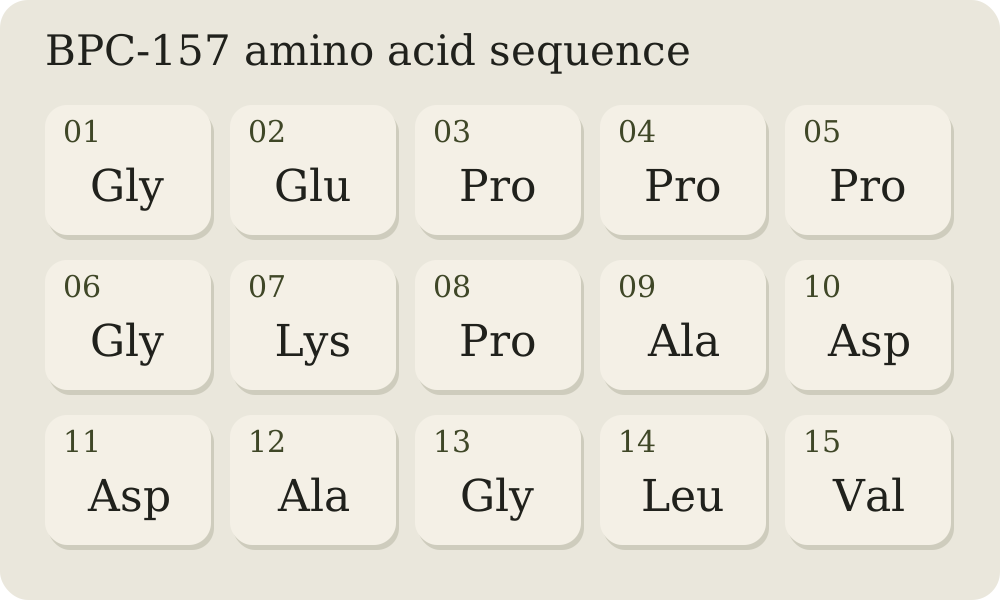
The sequence is Gly-Glu-Pro-Pro-Pro-Gly-Lys-Pro-Ala-Asp-Asp-Ala-Gly-Leu-Val. Spelled out, that is glycine, glutamic acid, proline, proline, proline, glycine, lysine, proline, alanine, aspartic acid, aspartic acid, alanine, glycine, leucine and valine. The order matters to the identity of the peptide.
BPC-157 is a synthetic copy of a partial sequence from a protein in human gastric juice. It contains 15 amino acids; its molecular formula is C62H98N16O22. ‘Pentadecapeptide’ is simply the length written in chemical vocabulary. PL 14736 and PLD-116 are alternative research names. The review of BPC-157 research describes the investigational gastric peptide.
‘Body Protection Compound’ sounds expansive. The sequence gives the name a precise chemical identity, with effects that still have to be tested.
Rat tendon, stomach lining and blood vessels
The same named fragment turns up in rather different injury experiments. In the transected rat Achilles-tendon study, recovery improved across strength, movement and tissue measures; rat tendon cells also grew out more readily in culture. A separate rat gastric-ulcer experiment found reduced ulcer area and faster healing, with intramuscular delivery outperforming placement in the stomach.
Blood-vessel growth is one candidate explanation. Work using chick membranes, rat hindlimbs with impaired blood supply and human vessel-lining cells found VEGFR2-related vessel growth and improved blood-flow recovery. VEGFR2 is a receptor involved in a vessel-growth signal. Blocking its movement into cells blocked the angiogenic effect.
Those are substantial experimental observations. Controlled human injury trials from a wider range of groups would move my confidence further. The 2025 narrative review identifies that thin human record.
Gastric stability, blood clearance, human pilots
‘Stable gastric peptide’ can sound as though the molecule stays intact indefinitely. The rat and beagle-dog pharmacokinetic study measured an elimination half-life under 30 minutes, with rapid breakdown into smaller peptide fragments. Resistance to gastric breakdown and removal from blood describe different circumstances. I wouldn't use either phrase as shorthand for the other.
In the 2025 intravenous safety pilot, two healthy adults, a 58-year-old man and a 68-year-old woman, had no observed adverse events or measurable changes in cardiac, liver, kidney, thyroid or glucose markers. The experiment checked short-term observations in those adults. The review counted only three small human pilot studies and found large, rigorous trials missing. Human benefit and long-term safety remain unresolved.
Safety and injury accounts
BPC-157 has no medical approval in any country. It is research material, without an established safe human therapeutic amount. FDA's 2023 finding excluded it from pharmacy compounding under the framework described in the current research record, and WADA prohibits it in sport. The clinical review discusses the regulatory and product-quality concerns.
The vessel-growth findings create a theoretical concern about cancer, because tumours also depend on blood vessels; they have not demonstrated a cancer harm in people. A brain-gut review of rodent research also describes serotonin and dopamine effects. Possible interactions with serotonin-affecting medicines remain an animal-based concern without human interaction studies.
Online accounts describe easier movement, less stiffness or digestive improvement, alongside complaints such as injection-site irritation, nausea, headache and occasional palpitations. These are anecdotal accounts, not clinical evidence. There is too little control over recovery, other treatments and the material itself to assign a cause. The cause remains unsettled, even when the precision of a peptide sequence lends those stories borrowed certainty.